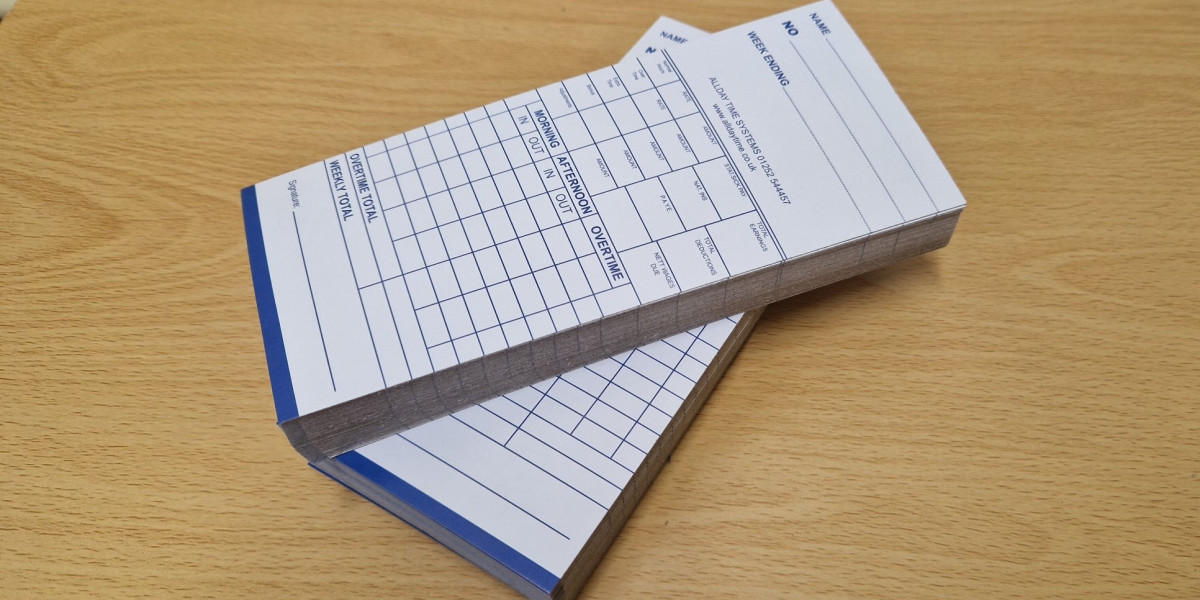

In the ever-evolving world of HR and workforce management, employee time tracking remains a crucial part of running a business efficiently. While digital tools and biometric systems have taken over many workplaces, clockcards — also known as punch cards or time cards — continue to serve as a simple yet powerful solution for time tracking.
So, what makes clockcards still relevant in 2025? Let’s explore the top 5 benefits of using clockcards for employee time tracking and understand why many businesses, especially small and medium enterprises (SMEs), continue to rely on this traditional system.
1. Simplicity and Ease of Use
One of the biggest advantages of using clockcards is their simplicity. The system is easy to understand and operate, requiring minimal training for both employees and HR personnel.
✅ How It Works:
Employees insert their clockcard into a punch machine at the start and end of their shift.
The machine prints the exact time on the card.
At the end of the week or pay period, the total hours are calculated from these time stamps.
This straightforward process makes it an ideal choice for:
Workplaces with frequent shift changes
New hires or temporary workers
Teams where technology adoption is a challenge
There are no complex logins, software updates, or user errors related to mobile apps — just plug and play.
2. Cost-Effective for Small Businesses
Not every business has the budget for a sophisticated, cloud-based attendance system or biometric devices. For many small businesses and startups, affordability is a key factor when choosing a time-tracking solution.
✅ Why Clockcards Are Budget-Friendly:
Low initial investment: A basic punch clock and a supply of cards cost significantly less than digital systems.
Minimal maintenance costs: Mechanical or digital punch clocks rarely need servicing.
No ongoing subscription fees or IT infrastructure is needed.
This makes clockcards a perfect fit for:
Small shops and retailers
Cafés and restaurants
Local service providers
Factories or workshops with tight margins
You get reliable employee attendance tracking without breaking the bank.
3. Tangible Records and Audit Trail
Unlike digital systems, which store time data in software or cloud databases, clockcards offer a physical, tangible record of an employee’s working hours. These stamped cards can serve as concrete proof during disputes, audits, or compliance checks.
✅ Real-World Benefits:
Helps resolve employee attendance disputes quickly.
Offers a clear audit trail for HR and finance teams.
Supports labor law compliance with easily accessible records.
In some legal or union environments, having paper documentation is considered more reliable and acceptable than digital logs that could potentially be edited or lost.
4. Improved Accountability and Discipline
Clockcards promote punctuality and responsibility among employees. Since every entry and exit is stamped and visible, workers become more aware of their attendance patterns, which encourages discipline.
✅ How It Enhances Accountability:
Employees know their time is being recorded accurately.
Managers can easily identify late arrivals, early exits, or missed punches.
Peer awareness can also deter time theft or buddy punching.
This is particularly effective in industries like:
Manufacturing
Retail and warehousing
Construction
Hospitality
In such environments, every minute counts, and a visible system like clockcards keeps everyone alert and responsible.
5. Reliable in Low-Tech or Offline Environments
One of the biggest limitations of modern time-tracking tools is their dependency on technology and internet connectivity. Clockcards, on the other hand, work perfectly offline.
✅ Why This Matters:
Ideal for locations with limited internet access.
Functions even during power outages or network failures.
No worries about data corruption, hacking, or system crashes.
Industries such as agriculture, field services, and rural manufacturing units benefit from this low-tech reliability. Clockcards are also great as a backup system in tech-reliant companies — ensuring that time tracking doesn't stop when systems fail.
Bonus: Clockcards Help Build Routine
In many industries, employees operate on structured shifts. Clocking in and out using physical cards creates a routine, helping employees transition between work and personal time more clearly. This mental separation between “on the clock” and “off the clock” can help reduce burnout and increase focus.
Are Clockcards Right for Your Business?
While clockcards are not for every business — especially those with hybrid teams or remote workers — they excel in specific scenarios:
Businesses that need basic but reliable time tracking
Workplaces that prioritize affordability and simplicity
Teams with a fixed physical location
Industries where internet access is limited or unreliable
If you’re running a small to medium-sized operation with hourly workers and a physical workplace, clockcards can still be one of the most practical and efficient solutions out there.
Final Thoughts
Clockcards may look old-fashioned, but they continue to deliver real-world value in modern workplaces. They offer a rare combination of reliability, affordability, and simplicity — qualities that many digital tools still struggle to deliver consistently.
As the saying goes: “If it ain’t broke, don’t fix it.”
Clockcards might not be the flashiest solution, but they get the job done, and sometimes, that’s exactly what a business needs.